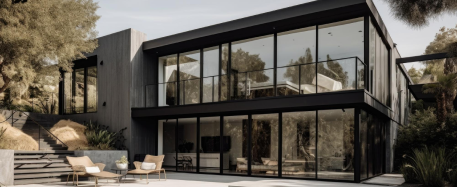
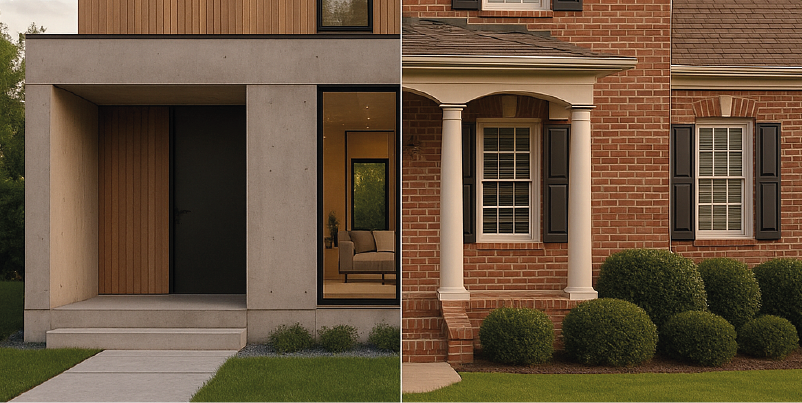
With advances in engineering and architecture, new approaches to housing construction have been gaining ground. One of the most talked about in recent years is the concept of Modulated Houses, an alternative to the traditional model of building on site. But how do these two ways of building compare?
This article is designed to answer the most frequently asked questions on the subject, clearly explaining the main differences between modular homes and conventionally built homes. If you’re thinking of investing in a new home or just want to find out more about the subject, here’s a solid starting point.
Contents
- What are Modular Houses?
- What characterizes a conventional building?
- Differences in the Construction Process
- Execution time
- Costs and Predictability
- Customization and Flexibility
- Sustainability and Waste Management
- Licensing and Regulation
- What to consider when choosing?
- FAQ
- Do you want to go ahead with a project?
1. What are Modular Houses?
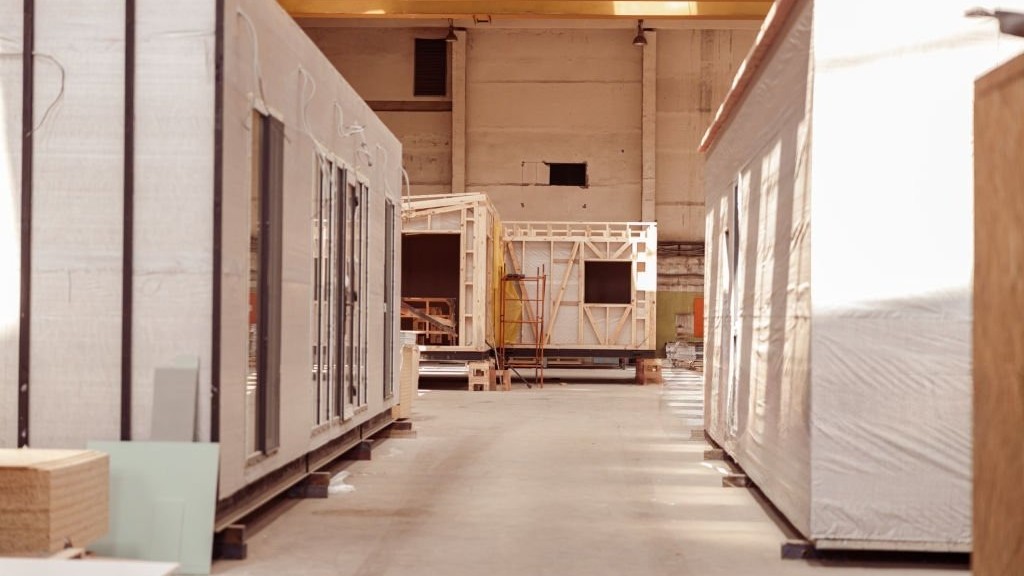
Modular houses are prefabricated constructions made up of modules or structural sections, mostly produced in factories. These modules are then transported and assembled on the ground, forming the complete dwelling.
This type of construction follows strict engineering and architectural standards and allows the construction of the building to take place in parallel with the preparation of the land, optimizing construction time.
2. What characterizes a conventional building?
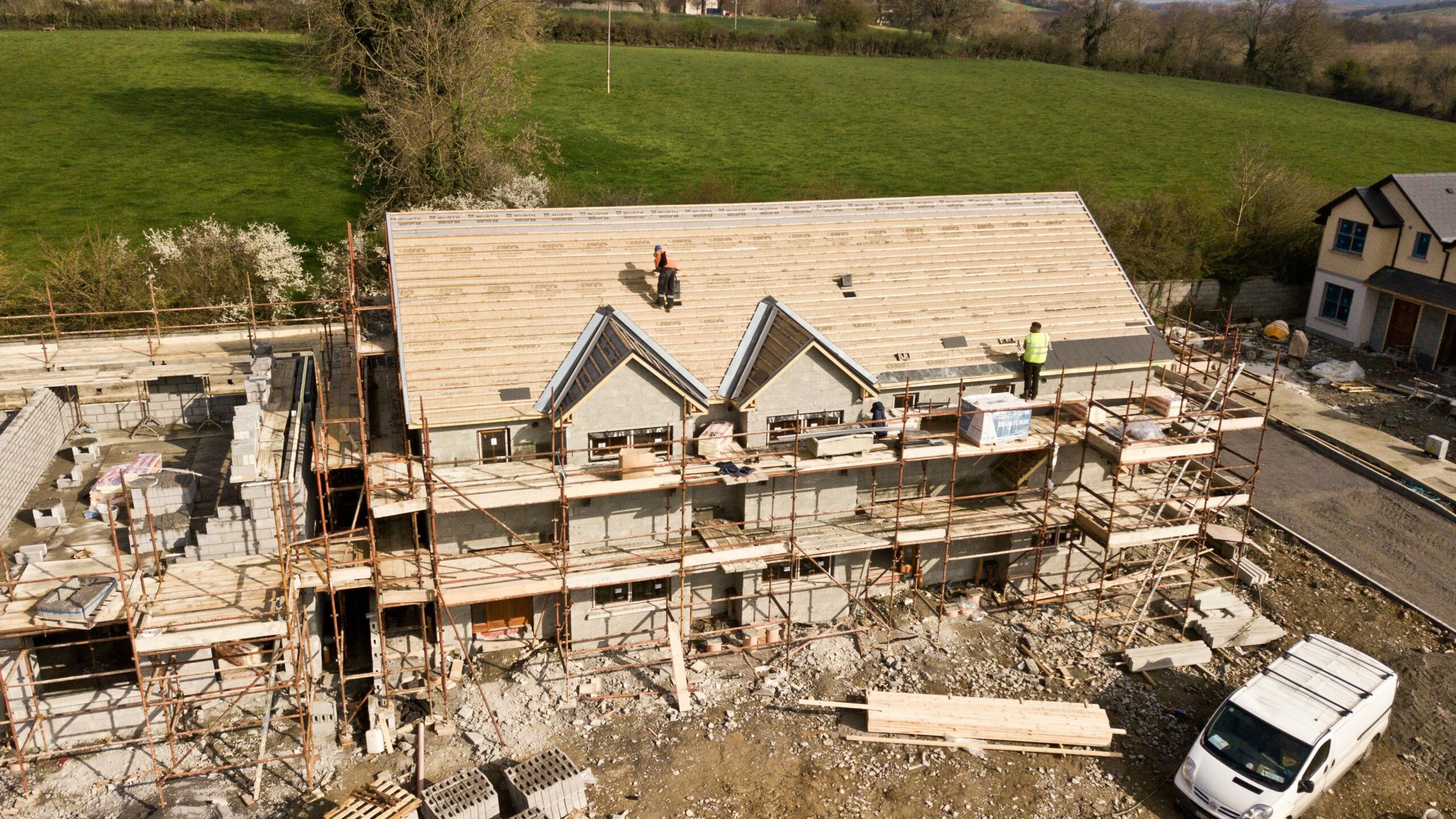
Conventional construction is construction done on site, from the foundations to the roof. It is the model most used historically, with techniques that have already been widely tested and adapted to various types of terrain and requirements.
The process involves several phases, such as foundations, structure, masonry, technical installations and finishes, and requires coordination between several teams over time.
3. Differences in the Construction Process
- Modular homes: Construction is carried out in a controlled environment (factory), which allows for greater precision, quality control and less exposure to unforeseen events such as adverse weather conditions.
- Conventional: All work takes place directly on the ground. This allows for greater visibility of the process, but can lead to delays due to the weather or the unavailability of materials and labor.
4. Execution time
Modular houses usually have a shorter execution time, since the construction and land preparation phases take place simultaneously. Conventional construction, on the other hand, follows a linear sequence, where each phase depends on the completion of the previous one.
However, the total time depends on the complexity of the project, the permits required and the location of the work.
5. Costs and Predictability
- Modulated: The standardization of the modules allows for greater predictability of costs, making it possible to close more rigorous budgets right from the start.
- Conventional: They can present greater cost variability due to changes on site, delays, or variations in the price of materials.
None of the models is necessarily more expensive or cheaper, it always depends on the type of project and the company responsible.
6. Customization and Flexibility
Customization is possible in both types of construction:
- Modular houses have flexibility within certain limits defined by the modular system used.
- Conventional houses allow for greater freedom to make changes throughout the project, although this can have an impact on time and budget.
The decision comes down to how much customization you want and whether it can be compatible with the modular systems available.
7. Sustainability and Waste Management
Modular construction tends to generate less waste of materials, since factory production is more efficient and controlled. It can also lead to better energy performance, if the modules are designed with this in mind.
In conventional construction, sustainability depends on the choice of materials, technical solutions and site planning.
8. Licensing and Regulation
Both modular and conventional homes are subject to the same legal requirements in Portugal:
- Municipal licensing
- Compatibility with the Municipal Master Plan (PDM)
- Requirements of the Energy Performance of Buildings Regulation (RECS)
- Energy certification
Having a modular home doesn’t mean you can build without a permit, all the legal rules still apply.
9. What to consider when choosing?
Before deciding between a modular or conventional house, it’s important to analyze:
- Time available for construction
- Desired degree of customization
- Ground conditions
- Budget and tolerance of unforeseen events
- Sustainability objectives
Both solutions are viable, with advantages and limitations. The essential thing is to align the project with the real needs of those who will inhabit the space.
10. FAQ
1. Do modular homes last as long as conventional ones?
Yes, both can be as durable as long as they are built with quality materials and properly maintained.
2. Can I build a modular house on any plot of land?
It depends on access to the site and the characteristics of the terrain. A technical study is essential beforehand.
3. Is it possible to make changes to a modular project once it has started?
Changes are more limited, especially once production of the modules has begun. Prior planning is essential.
4. What is the environmental impact of each solution?
Modular homes can have less impact during the construction phase. The sustainability of conventional construction, on the other hand, depends on the decisions made during the project.
Do you want to go ahead with a project?
RoyalBuild can accompany the project from licensing to the final stage. We offer a technical, rigorous and personalized approach for each client and partner. Contact us to find out more.